"Cold Wallet Is Not a Security Strategy"
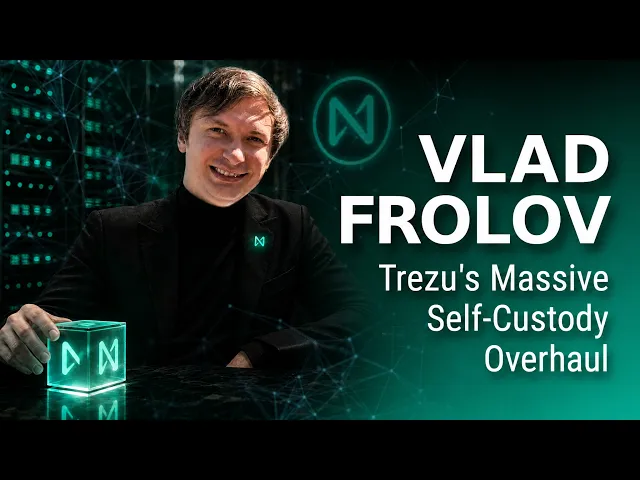
Trezu co-founder and CTO Vlad Frolov joined Digital Cash Network to explain what a hardware wallet actually protects, why "offline" and "secure" aren't the same thing, and what treasury teams should do instead.

Trezu Team
Interview

Vlad has been building on NEAR since the protocol itself, worked alongside its co-founder Ilya, and holds a master's degree in cybersecurity. The conversation covered the Coldcard drains, the limits of self-custody, and how shared custody works when your team doesn't have a computer science background.
The misconception underneath everything
"I've heard from some people who are less technical that they believe your tokens live on your cold wallet device. That's not the case."
The registry lives on the blockchain. Balances, transfers, full history — public, visible to anyone with a browser. Your device holds exactly one thing: a cryptographic key.
That distinction changes what "security" even means. Nothing on your device needs to be broken into. The only question that matters is whether anyone else can produce the same key you hold.
Normally they can't. The number of possible keys is large enough that guessing yours would take longer than the universe has been around. That's the entire security model, and it holds — as long as the key was generated properly.
Where Coldcard broke
The weak point wasn't the hardware, the offline storage, or the user's setup. It was the algorithm generating the initial key.
Once attackers understood how that generator worked, the search space collapsed. Instead of an impossible number of candidates, they had a manageable pool — small enough to work through, checking each guess against the chain to see if it matched a funded account.
Vlad's framing of what happened is worth sitting with: nobody's key was stolen. Attackers simply ended up holding duplicates. From the blockchain's perspective, both copies are equally valid. Both can sign.
"The security of any system is defined by the weakest point of the system."
He connects this to why quantum computing worries cryptographers. Quantum machines don't break into offline wallets either. They just make generating duplicate keys fast — millions of years compressed into days or weeks. Same threat model, different scale.
So what does a cold wallet actually give you?
It protects the key from network-based theft. Malware on your laptop can't reach it. A drained browser extension can't touch it.
That's real, and it matters. But it only covers one attack vector out of several. It does nothing about a flawed generator inside the device. It does nothing if someone finds your written backup. And it does nothing about the largest category of loss in crypto: users losing access themselves.
The host, in crypto since 2012, argued that self-inflicted loss has probably destroyed more funds than every hack combined. Early Bitcoiners in New Hampshire whose families could never recover the coins. A Dash investor who buried keys behind exotic derivation paths and locked himself out permanently.
Cold storage handles one threat well. Treating it as the whole answer is the mistake.
The pattern among wallets that held up
Two things separated the accounts that came through the Coldcard incident intact.
Keys from different vendors. If your multisig requires three signatures and all three came from the same manufacturer using the same generation method, you haven't multiplied security — you've multiplied one weakness three times. Different vendors mean different implementations. A flaw in one doesn't reach the others.
A BIP-39 passphrase. An extra word only the user knows, layered on top of the generated seed. User-supplied entropy on top of vendor-supplied entropy. It saved a lot of people.
Vlad's caution runs in both directions, though. Set your threshold to five of five, lose a single key, and you're locked out for good. "They're still sitting on your account, but you cannot control it anymore." Over-engineering security creates its own failure mode.
Multisig without the crypto vocabulary
Vlad's reference point for non-technical users is two-factor authentication. A password plus a code from a second place. Only when both arrive does anything execute.
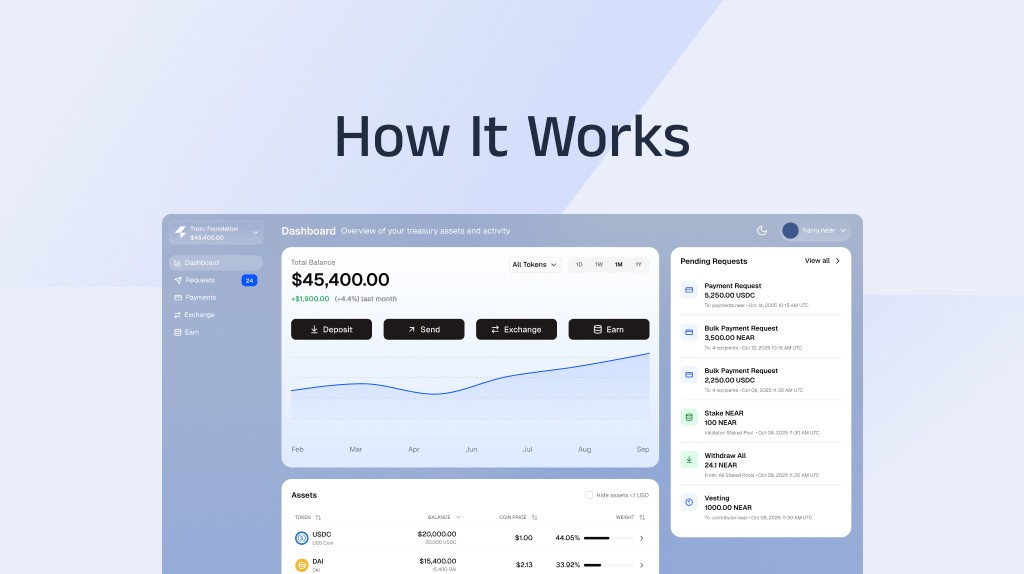
Trezu implements this as a smart account on NEAR. It tracks confirmations and executes once the threshold is met. Simple enough in principle — but the architecture creates two things classic multisig can't offer.
Keys aren't equal. One key can be permitted to propose a payment and nothing else. Another can only approve or reject. In traditional multisig, and in MPC threshold-signature wallets, the cryptography combines equal signatures. Roles cannot be enforced at all — Vlad is blunt that it's 100% impossible.
"From the security point of view, you don't want to give your intern the same key as the approvers."
Rejections are on the record. With most setups you see who approved a transaction and never who declined it. On a smart account, both votes are visible on chain, along with which keys were involved at every step.
Vlad says this specific capability drove more interest in user interviews than almost anything else, because real teams already have roles. An ops manager prepares the payment. A founder approves it. The tooling should match how the work is actually divided.
The question the host asked directly
Everything runs on NEAR. Isn't that a single point of failure?
Vlad didn't dodge it. There is no bug-free software, and the risk is real. What he offered was track record: NEAR has run since 2020 with 100% uptime. The multisig contract underneath Trezu has been live since 2021, secured over $250 million at peak token valuations, and holds more than $70 million under management today.
Audits run continuously — human experts, plus every new AI model released, run against the system looking for what previous passes missed. Nothing found so far.
"The weakest point defines your whole security. So we never take the chances."
Watch the full interview on Digital Cash Network.